
On May 26th, participants of the Seminar on Cybersecurity for African Countries and the Seminar on Digital Capacity Building for China-ASEAN Countries continued their study tour in Sichuan Province. During the day, the participants visited Tongwei Photovoltaic Science and Technology Museum and Zhanqi Village in Pidu District, Chengdu, exploring China's achievements and practical experience in sustainable development — from green energy technologies to rural revitalization efforts.
In the morning, the participants arrived at the Tongwei Photovoltaic Science and Technology Museum, located in the Shuangliu Park of Chengdu High-tech Comprehensive Bonded Zone. The museum spans over 2,300 square meters and features an artistic, scene-based innovative design that integrates audio-visual systems, interactive installations, and physical models, creating a multidimensional immersive experience combining sight, sound, and touch. The main exhibition hall seamlessly connects to a viewing corridor of Tongwei's smart solar factory, forming an integrated industrial culture experience space of "One Hall and one Corridor" that blends virtual and real elements. Following seven thematic exhibition routes — Born Toward Light, Quest for Light, Bringing the Benefits of Light to the World, Advancing with Light, Innovation in Light, Light Illuminating All Things, and Light for a Zero-Carbon Future — the participants gained an in-depth understanding of Tongwei's high-purity crystalline silicon, high-efficiency solar cells, photovoltaic modules, and innovative development models such as the Integrated fishery-solar power model.
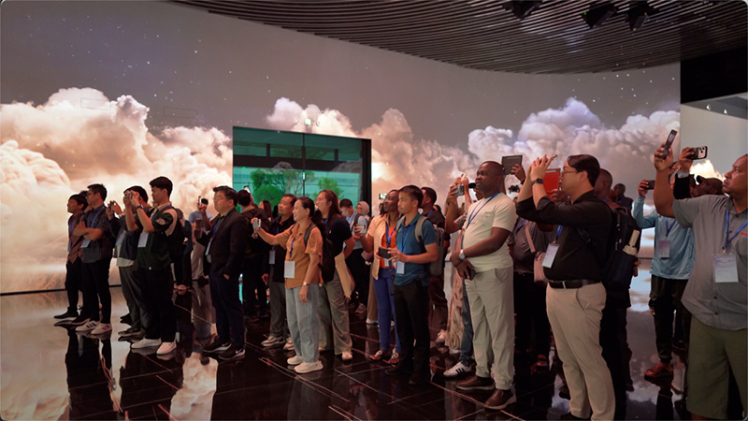
Scene from the Visit [Photo by Langtao Liu]
In the immersive experience area, the participants watched a film about the evolution of energy. Wahyu Setiawan Wibowo, a participant from Indonesia, remarked on how impressive it was to finally see with his own eyes how Chinese factories operate and transition from traditional fossil fuels to solar energy applications. At the solar panel exhibition area, Judith Karambu M'Muruthanla, a participant from Kenya, noted that while solar panels exist in her hometown, they are all older models, far less advanced than what she saw here.
Through physical models, large-screen data, process visualizations, and digital interactions, the Tongwei Photovoltaic Science and Technology Museum clearly presented efficiency improvements, process innovations, intelligent manufacturing systems, and the zero-carbon development pathway, allowing participants to directly experience Tongwei's systematic capabilities that ensure the long-term product stability. At the Light for a Zero-Carbon Future interactive experience zone, Tongwei's pioneering fishery-solar integration model — generating electricity on the water while farming fish beneath it — drew widespread attention. Wahyu Setiawan Wibowo noted that Indonesia, located on the equator with abundant sunshine year-round, would greatly benefit if Tongwei could cooperate with Indonesia to bring solar technology to households, factories, and schools across the country.
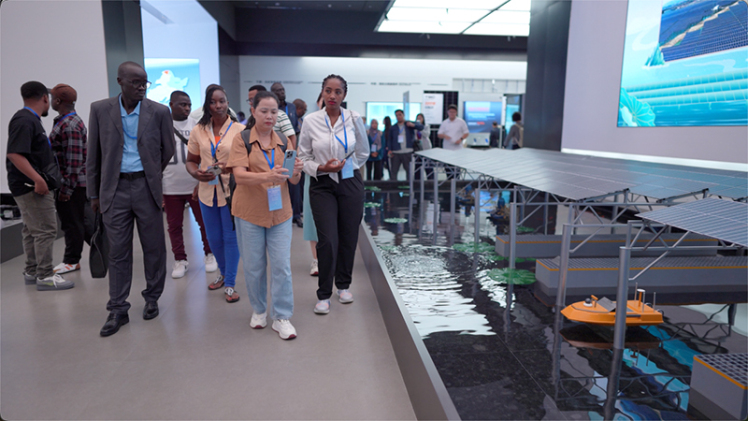
Scene from the Visit [Photo by Langtao Liu]
In the afternoon, the participants traveled by bus to Zhanqi Village in Tangchang Town, Pidu District, Chengdu. Originally named Jifeng Brigade, Zhanqi Village is situated at the foot of Hengshan Mountain along the Baitiao River. Centered around the village's Party-masses service center, the village has developed a cluster of five museums — the Farming Culture Museum, the Original Aspiration Hall, the Rural Revitalization Expo Hall, the Village History Museum, and the Pixian Douban (broad bean paste) Museum — complemented by special training bases such as the Rural Eighteen Workshops Intangible Cultural Heritage Experience Zone and the Rural Revitalization Training Institute. This forms a network of 'one core hub plus multiple practice sites.'
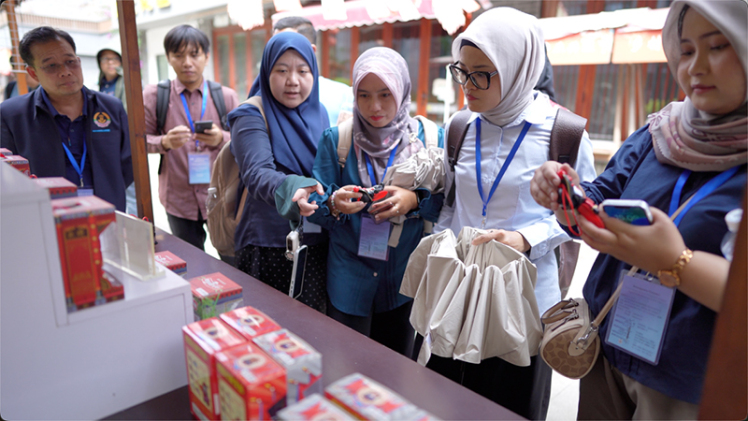
Scene from the Visit [Photo by Langtao Liu]
The participants were deeply impressed by the clean village roads and rich cultural atmosphere, and one unattended roadside stall particularly caught their attention. The stall displayed local specialty products, handicrafts, and small snacks. There was no shop assistant, only a payment QR code, allowing customers to pick up items and pay on their own. Nias Meilia Shofa, a participant from Indonesia, bought a panda doll that could change between four different expressions. She remarked that the place felt safe and trustworthy, with transactions based purely on honesty and trust, and everything running smoothly.
The participants also visited the Rural Eighteen Workshops Intangible Cultural Heritage Experience Zone, where they learned about traditional brewing techniques and exquisite craftsmanship at the Pixian Douban Museum and Tangchang Cloth Shoe Workshop. The Rural Eighteen Workshops is a collective-owned, self-operated industrial project of Zhanqi Village, bringing together over a dozen craft workshops — including Cloth shoe workshops, Shu embroidery workshops, and three traditional weaving workshops — as well as multiple intangible cultural heritage techniques. Operating under a "front store, back workshop" model, it has become a hub for the preservation, production, research, education, experiential activities, and exhibition of intangible cultural heritage.
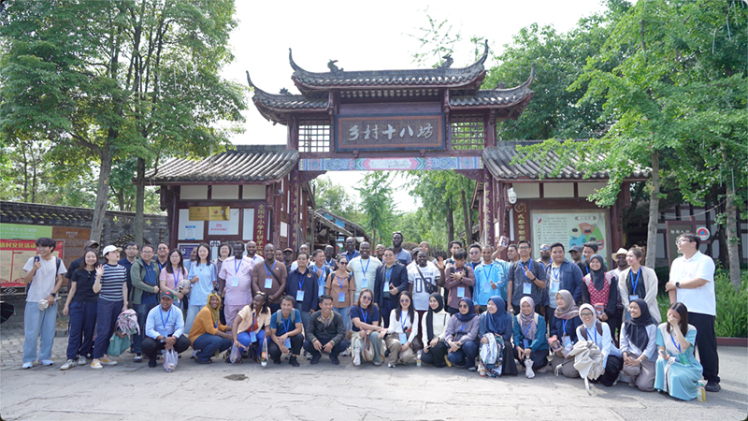
Group Photo [Photo by Langtao Liu]
From the green industrial pulse of the Tongwei Photovoltaic Science and Technology Museum to the picturesque countryside of Zhanqi Village, this one-day itinerary allowed the seminar participants to simultaneously experience both the technological dimension and the human-centered side of China's high-quality development, gaining a more comprehensive and intuitive understanding of China's practical pathways in green energy transformation and rural development.
1、“國際在線”由中國國際廣播電台主辦。經中國國際廣播電台授權,國廣國際在線網絡(北京)有限公司獨家負責“國際在線”網站的市場經營。
2、凡本網註明“來源:國際在線”的所有信息內容,未經書面授權,任何單位及個人不得轉載、摘編、複製或利用其他方式使用。
3、“國際在線”自有版權信息(包括但不限于“國際在線專稿”、“國際在線消息”、“國際在線XX消息”“國際在線報道”“國際在線XX報道”等信息內容,但明確標注為第三方版權的內容除外)均由國廣國際在線網絡(北京)有限公司統一管理和銷售。
已取得國廣國際在線網絡(北京)有限公司使用授權的被授權人,應嚴格在授權範圍內使用,不得超範圍使用,使用時應註明“來源:國際在線”。違反上述聲明者,本網將追究其相關法律責任。
任何未與國廣國際在線網絡(北京)有限公司簽訂相關協議或未取得授權書的公司、媒體、網站和個人均無權銷售、使用“國際在線”網站的自有版權信息産品。否則,國廣國際在線網絡(北京)有限公司將採取法律手段維護合法權益,因此産生的損失及為此所花費的全部費用(包括但不限于律師費、訴訟費、差旅費、公證費等)全部由侵權方承擔。
4、凡本網註明“來源:XXX(非國際在線)”的作品,均轉載自其它媒體,轉載目的在於傳遞更多信息,豐富網絡文化,此類稿件並不代表本網贊同其觀點和對其真實性負責。
5、如因作品內容、版權和其他問題需要與本網聯繫的,請在該事由發生之日起30日內進行。