
beijing
On June 30, the Northern Shaanxi-Guanzhong Third Corridor 750 kV Power Transmission and Transformation Project was put into operation. Known as a "super project," it represents the largest investment, longest transmission route, greatest technical complexity, and largest number of participating teams in the history of Shaanxi power grid construction. As Shaanxi's third major power transmission artery for sending electricity from northern to southern Shaanxi, the project opens up a "green" corridor for delivering electricity from Northern Shaanxi's new energy bases to the Guanzhong load center.
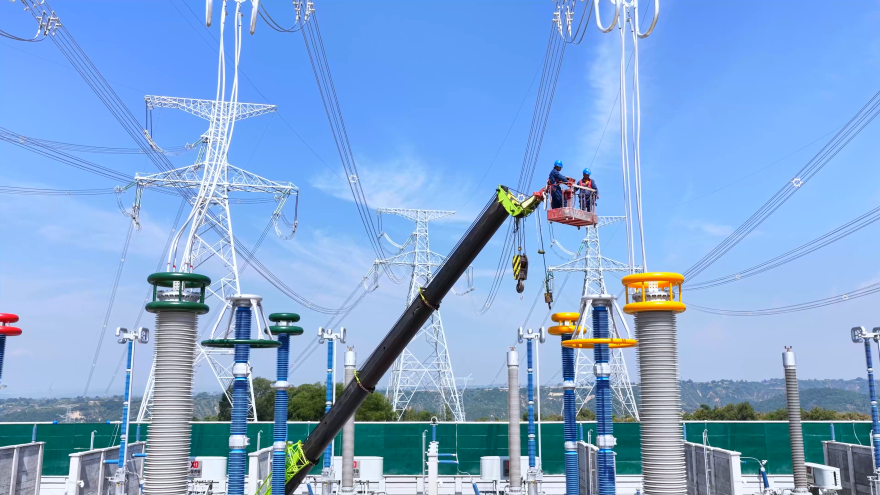
Power grid workers at work under clear skies
The Northern Shaanxi-Guanzhong Third Corridor 750 kV Power Transmission and Transformation Project is a green development project and a livelihood project that supports Shaanxi Province's high-quality economic and social development. After it is put into operation, Shaanxi's backbone power grid will be upgraded from a "日"-shaped structure to a "田"-shaped structure. Each year, the project is expected to replace the consumption of 7 million tons of raw coal and reduce carbon dioxide emissions by 14 million tons, equivalent to planting 760 million trees. It will also significantly strengthen regional grid reliability and facilitate new energy integration.
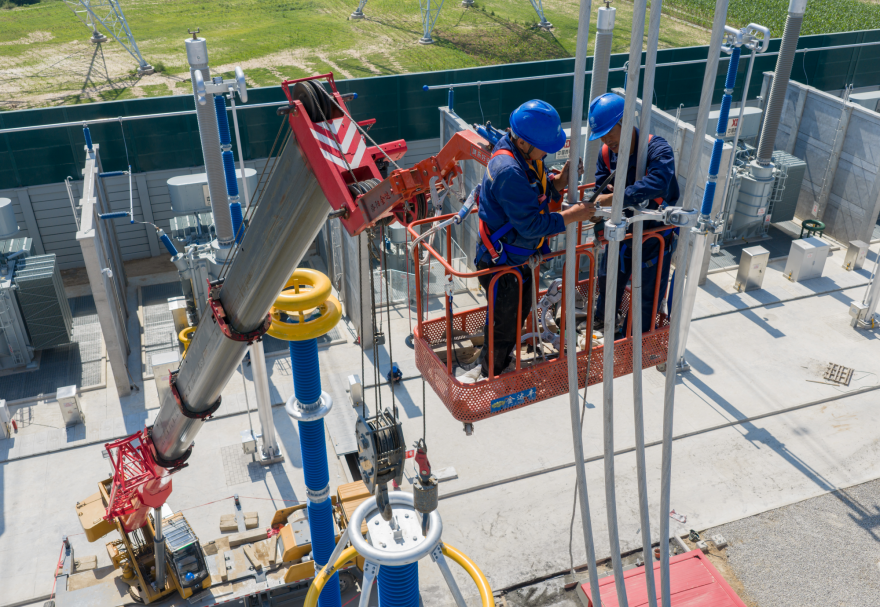
On-site construction work
The project has achieved independent and controllable production of key high-end power components and enabled domestic substitution, laying a solid foundation for the wider application of future ultra-high-voltage projects. It also enhances the grid's ability to withstand faults and improves overall system stability, while driving iterative upgrades across China's power equipment industrial chain and supporting greater technological self-reliance in the power sector.
This stable north-south transmission corridor will not only meet the growing demand in the Guanzhong Plain Urban Agglomeration but also deliver over 3 million kilowatts of clean power to Central and East China. This will help Shaanxi integrate more quickly into the unified national power market and provide solid strategic support for achieving China's dual carbon goals.


Copyright ©1997- by CRI Online All rights reserved
