
beijing
The 27th National Pishu Annual Conference and the 2nd Think Tank Forum on Chinese Modernization Studies were held in Hohhot on August 14 and 15. Centered on the theme “Accelerating the Development of an Independent Knowledge System through High-Quality Think Tank Research Outcomes,” the conference focused on discussions of high-quality Pishu research and compilation, digital and intelligent transformation, and ways to improve the effectiveness of international communication. The conference aimed to support the development of China’s independent knowledge system in philosophy and social sciences and the advancement of Chinese modernization through high-quality think tank research outcomes.
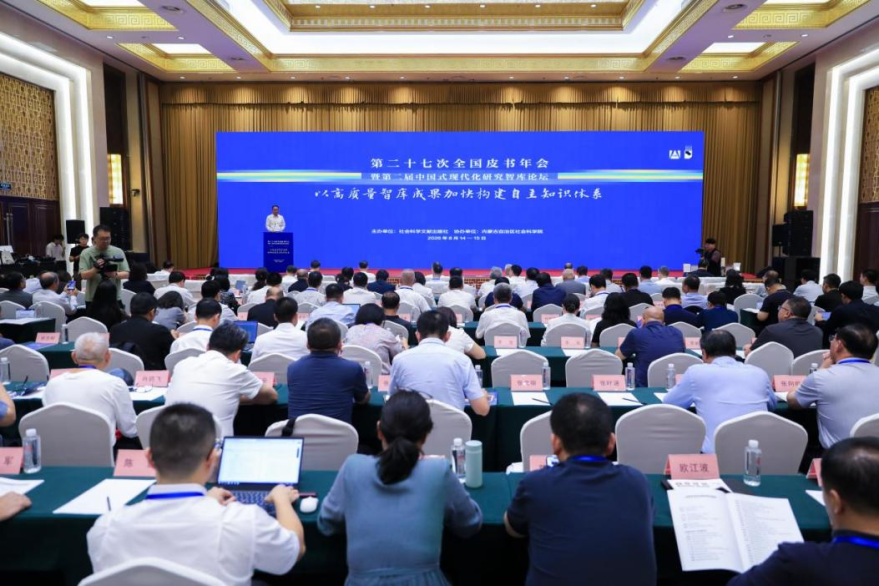
The conference was hosted by Social Sciences Academic Press and co-organized by the Inner Mongolia Academy of Social Sciences. It brought together experts from academies of social sciences, universities, and think tanks across the country. Xue Songyan, Secretary-General of the Chinese Academy of Social Sciences, set out five requirements for Pishu research and compilation and studies of Chinese modernization: strengthening ideological guidance; conducting organized research on key tasks under the 15th Five-Year Plan; building an independent knowledge system grounded in Chinese practice; using artificial intelligence to develop a new human–AI collaborative research model; and strengthening international communication capacity and better telling the story of Chinese modernization.
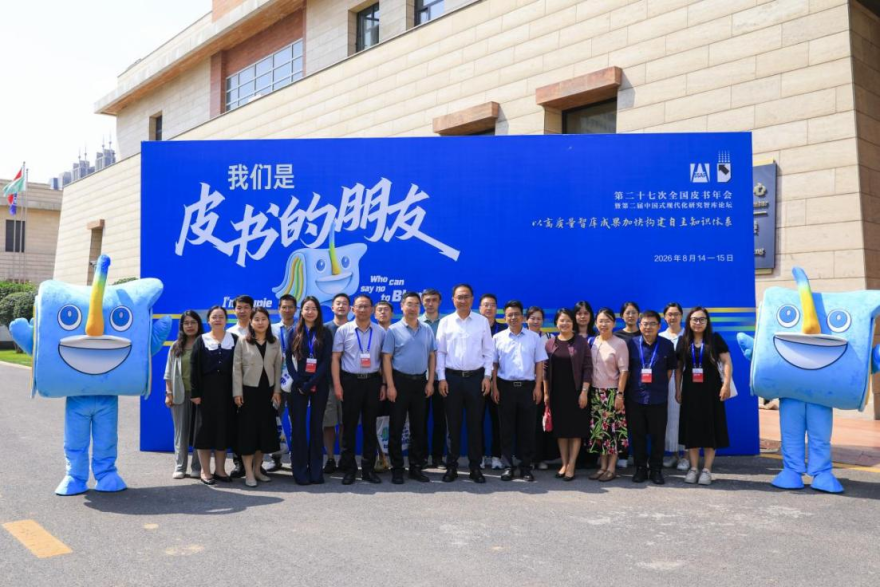
Yu Renjie, Vice Chairman of the Inner Mongolia Autonomous Regional Committee of the Chinese People’s Political Consultative Conference and Chairman of the Inner Mongolia Regional Committee of the Jiusan Society, outlined Inner Mongolia’s development advantages and strategic positioning. As the 15th Five-Year Plan period gets underway, he focused on the autonomous region’s key development priorities and expressed the hope that the annual conference would help summarize Inner Mongolia’s development experience, draw on expert insights to address development challenges, and better tell Inner Mongolia’s story.
An awards ceremony was held during the conference. A total of 61 Pishu titles received the Outstanding Pishu Award, 43 reports received the Outstanding Pishu Report Award, and eight titles received the Outstanding New Pishu Award. The conference also released the second batch of key titles under the Publishing Project for the Chinese Modernization Studies Series and presented certificates for five selected works. The “Zhenyan Digital Intelligence Platform for Pishu Research and Compilation” was previewed at the event to advance the digital transformation of Pishu research and compilation.
Experts including Wu Shulin and Zhao Zhongxiu delivered keynote speeches and thematic presentations. The conference featured six parallel forums on topics including building an independent knowledge system, industrial modernization, new quality productive forces, and green development. These discussions sought to support Chinese modernization through high-quality think tank research outcomes.


Copyright ©1997- by CRI Online All rights reserved
