On August 14, overseas media representatives and foreign expats from Bangladesh, Canada, South Korea, Sri Lanka, Thailand and Pakistan visited the Yellow River Delta National Nature Reserve in Dongying City, east China's Shandong Province, during the "Strolling Through Dongying, Decoding Yellow River Culture" International Communication Event. They visited the Yellow River Delta wetland along the eco-tourism route to learn about the wetland ecosystem, wildlife conservation, and ecological restoration efforts. The unique wetland landscape and rich biodiversity nurtured by the confluence of the Yellow River and the Bohai Sea left the delegation in awe.
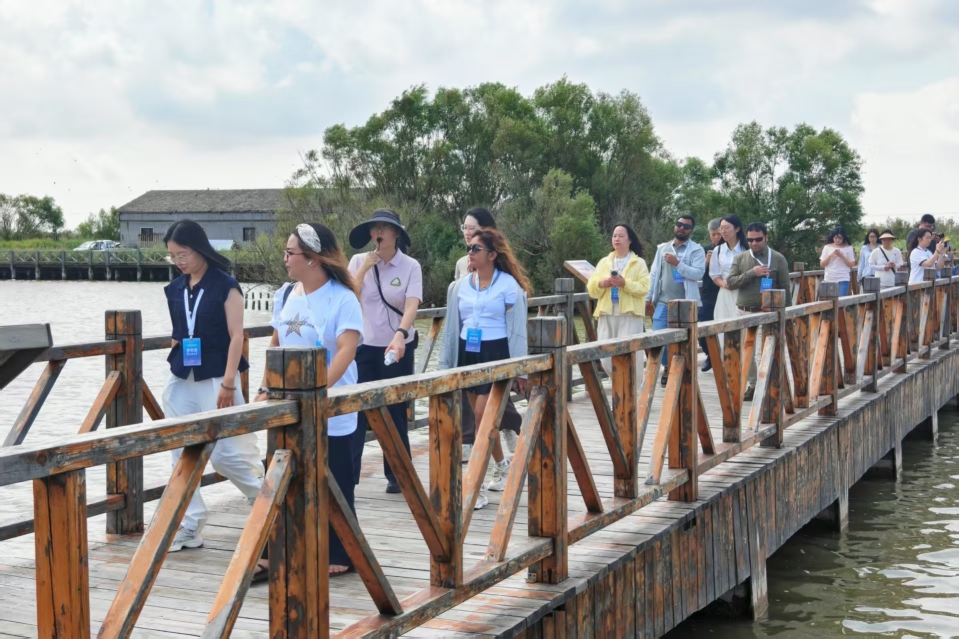
The delegation visited the Yellow River Delta National Nature Reserve.
Photo by Wang Xianxin
The Yellow River Delta National Nature Reserve focuses on protecting the newly formed wetland ecosystem and rare and endangered birds. Located at a key node of the East Asia-Australasian Flyway, it is an important "transit station" for migratory birds crossing continents. Every year, millions of migratory birds stop here to overwinter or breed, earning it the reputation of "international airport for migratory birds".
In recent years, Dongying has steadily advanced ecological conservation and restoration, bringing continuous improvement to the quality of wetland ecosystems. Thanks to years of efforts, the number of bird species in the Nature Reserve has risen from the initial 187 to 376, including 26 species under national first-class protection and 72 under national second-class protection. It has become the world's largest breeding ground for oriental white storks, the world's second-largest breeding site for Saunders's gull, the southernmost wild breeding boundary for red-crowned cranes, and the world's second-largest wintering habitat for Siberian cranes, marking remarkable achievements in ecological protection.
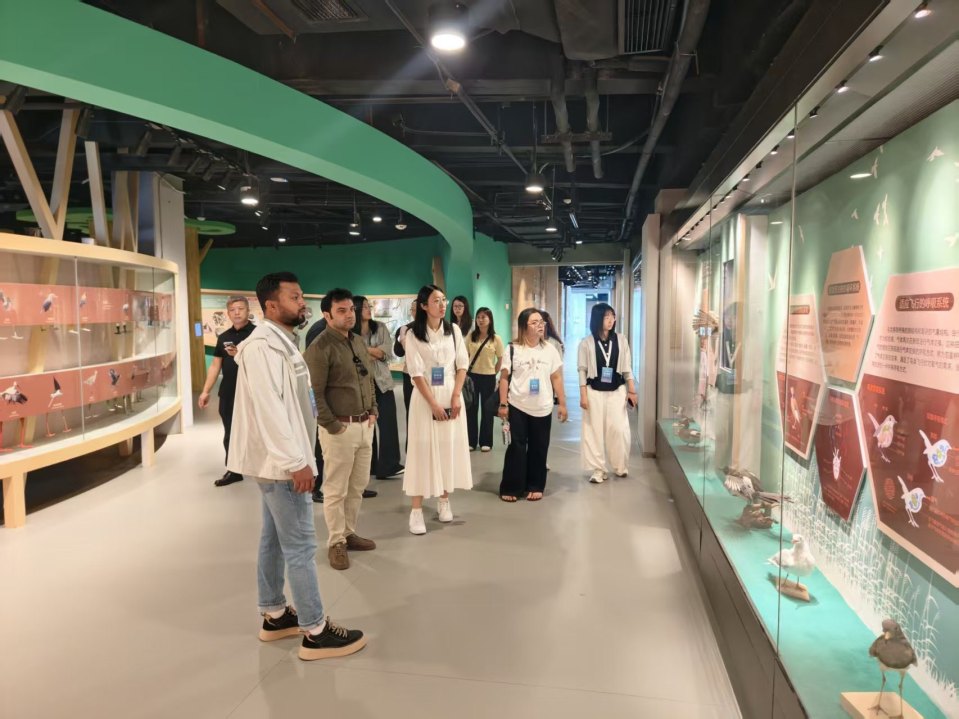
The delegation visited the Yellow River Delta Bird Museum.
Photo by Wang Xianxin
In the Nature Reserve, the delegation visited the Yellow River Delta Bird Museum, the natural willow boardwalk, the Bird Release Area, the Yellow River Estuary stone tablet and the Yuanwang Building.
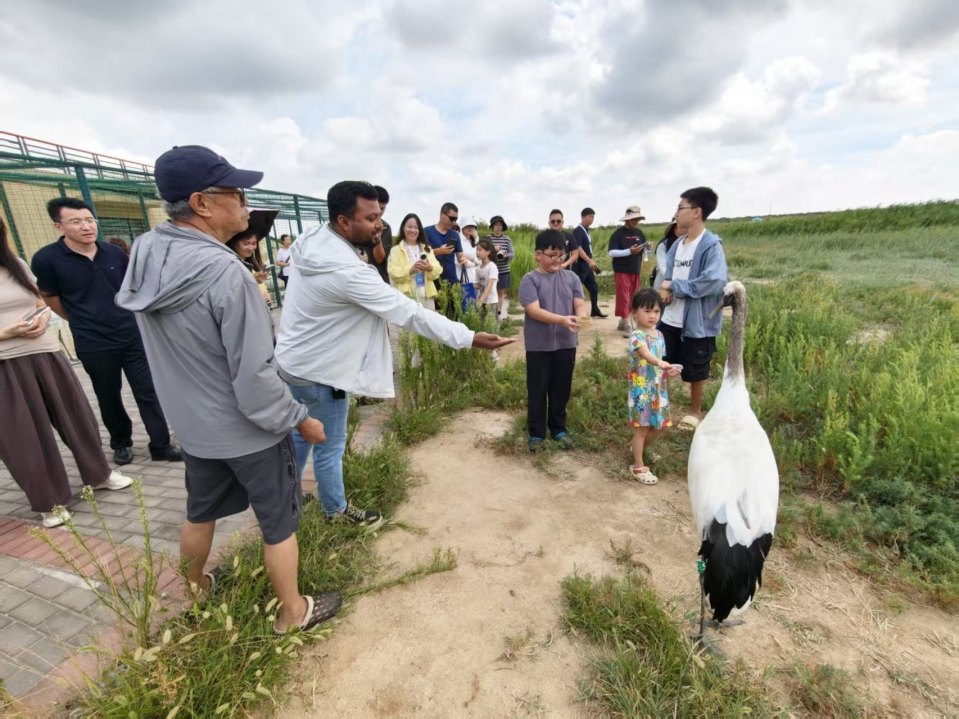
The birds release area.
Photo by Wang Xianxin
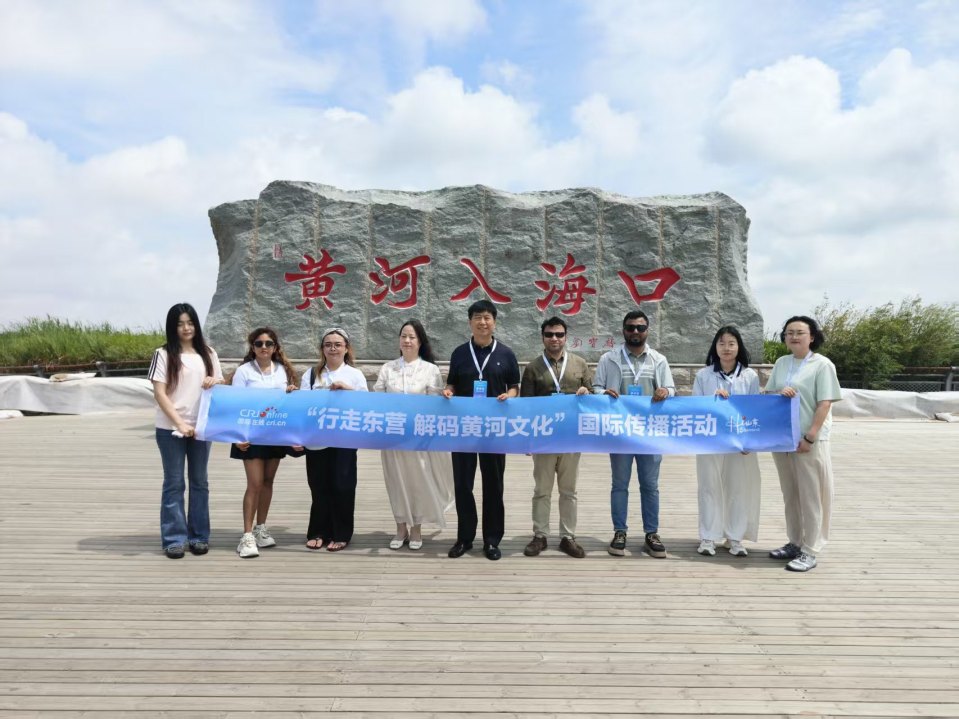
The group photo.
Photo by Wang Xianxin
Dongying, as a city located at the Yellow River Estuary, has always given high priority to ecological protection in its development. The ecological conservation practices in Dongying and even across China has left a deep impression on the delegation.
1、“國際在線”由中國國際廣播電台主辦。經中國國際廣播電台授權,國廣國際在線網絡(北京)有限公司獨家負責“國際在線”網站的市場經營。
2、凡本網註明“來源:國際在線”的所有信息內容,未經書面授權,任何單位及個人不得轉載、摘編、複製或利用其他方式使用。
3、“國際在線”自有版權信息(包括但不限于“國際在線專稿”、“國際在線消息”、“國際在線XX消息”“國際在線報道”“國際在線XX報道”等信息內容,但明確標注為第三方版權的內容除外)均由國廣國際在線網絡(北京)有限公司統一管理和銷售。
已取得國廣國際在線網絡(北京)有限公司使用授權的被授權人,應嚴格在授權範圍內使用,不得超範圍使用,使用時應註明“來源:國際在線”。違反上述聲明者,本網將追究其相關法律責任。
任何未與國廣國際在線網絡(北京)有限公司簽訂相關協議或未取得授權書的公司、媒體、網站和個人均無權銷售、使用“國際在線”網站的自有版權信息産品。否則,國廣國際在線網絡(北京)有限公司將採取法律手段維護合法權益,因此産生的損失及為此所花費的全部費用(包括但不限于律師費、訴訟費、差旅費、公證費等)全部由侵權方承擔。
4、凡本網註明“來源:XXX(非國際在線)”的作品,均轉載自其它媒體,轉載目的在於傳遞更多信息,豐富網絡文化,此類稿件並不代表本網贊同其觀點和對其真實性負責。
5、如因作品內容、版權和其他問題需要與本網聯繫的,請在該事由發生之日起30日內進行。


